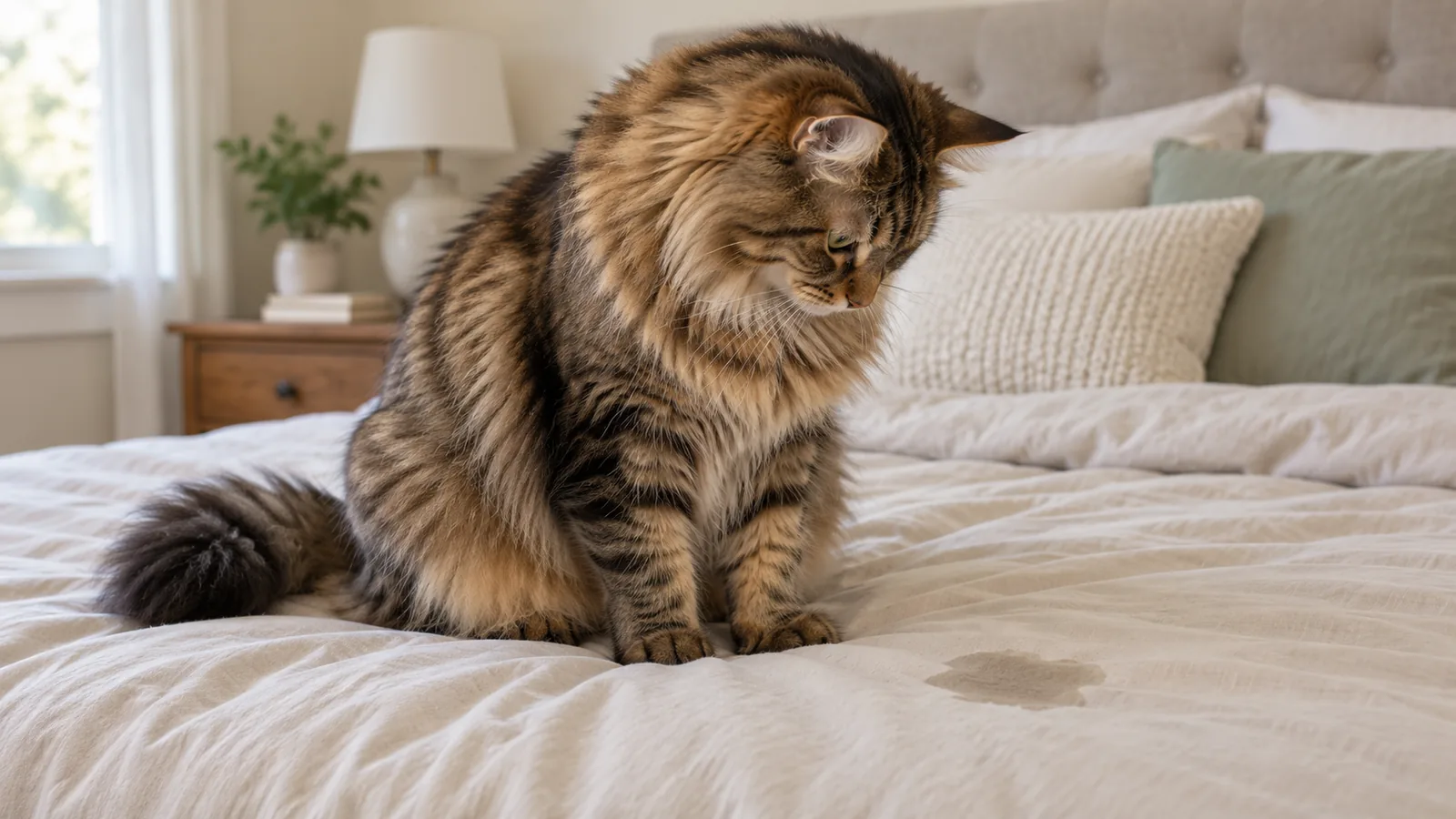
An occasional upset stomach isn't unusual for dogs and cats. But when vomiting keeps happening over several weeks, even if it's only once or twice a week, it's time to look more closely at what's going on. Chronic vomiting generally refers to vomiting that persists or recurs for three weeks or longer, and it can be surprisingly easy to overlook when your pet seems perfectly normal between episodes. One of the most useful things you can do is start keeping a record. How often is your pet vomiting? Does it happen right after eating or hours later? Is it food, yellow bile, or something else? Have you noticed changes in their appetite, energy, or weight? These details help us recognize patterns that aren't always obvious from one episode to the next, and can provide important clues about the underlying cause.
At Soda Springs Animal Clinic, we combine what you've observed at home with a physical exam and, when indicated, in-house lab work, X-rays, and ultrasound to investigate why your pet keeps vomiting. From dietary problems and parasites to gastrointestinal inflammation and other medical conditions, we'll work through the possibilities and explain what each step tells us. If your dog or cat has been vomiting repeatedly, schedule an appointment and bring your notes along. Even when your pet seems otherwise healthy, recurring vomiting deserves a closer look.
Chronic Vomiting: The Four Things to Know
- Vomiting that keeps coming back over weeks or months needs a workup, not another round of bland food.
- The timing, appearance, and other symptoms you record at home narrows the list faster than any single test.
- Vomiting with weight loss, a smaller appetite, or on-and-off diarrhea points toward organ disease or inflammation in the gut wall.
- Finding the cause can take more than one visit, and normal results still take causes off the list.
When Does Vomiting Mean It's Time to Call Us?
Vomiting that repeats across two or three weeks needs an appointment even when your pet seems fine in between. Add weight loss, more drinking and urinating, low energy, or diarrhea that comes and goes, and the visit moves up the calendar. A cat bringing up hairballs more than about once a month has also moved past normal grooming, because the same motility and inflammation problems that drive chronic vomiting make hair harder to move through the gut.
Age lowers the threshold. Kidney disease in older dogs and cats, and an overactive thyroid in older cats, often give vomiting as their first visible sign, months before anything else looks wrong, so a senior pet with a few weeks of episodes should be seen sooner. Yearly screening labs through our wellness plans can catch some of those conditions before the vomiting starts.
What Can Your Pet's Vomiting Pattern Tell You?
What the vomit looks like, when it happens, and how your pet acts afterward often narrow the list before any test is run. For each episode, jot down the date and time, how long after a meal it happened, whether your pet ate again afterward, and any changes in drinking, urination, stool, or energy. Snap a phone photo before you clean up, too.
What Does the Color and Texture of the Vomit Mean?
The color and texture of vomit each point somewhere different.
| What you see | What it often means |
| Yellow or green bile | An empty stomach, often overnight |
| Undigested food within an hour | Regurgitation, fast eating, or an esophagus problem |
| Dark, coffee-ground material | Digested blood from the stomach or upper intestine |
| Bright red blood | Fresh bleeding, a call to us right away |
| Foamy white liquid | Acid and saliva on an empty stomach, or a cough mistaken for vomiting |
What Does the Timing of the Vomiting Tell You?
- Yellow bile first thing in the morning: This usually points to bilious vomiting syndrome, where an empty stomach overnight lets bile irritate the lining. A small snack before bed often settles it.
- A full meal back up right after eating, with appetite still good: This often means your pet ate too fast or is stressed. Food that comes up effortlessly can also be regurgitation from the esophagus. A narrowed stomach outlet (pyloric stenosis) is less common and tends to bring meals up a few hours later.
- A full meal back up while your pet seems unwell: Vomiting with a poor appetite, low energy, or a sore belly raises concern for a partial blockage from something swallowed, and that needs to be seen promptly.
- Vomiting scattered through the day, with more drinking and urinating: This pattern points toward disease in an organ outside the gut, such as the kidneys, liver, or thyroid, or diabetes.
- Vomiting with weight loss and on-and-off diarrhea: This combination suggests inflammation or other disease in the stomach and intestinal wall.
No single pattern is a diagnosis, but a week or two of notes gives us a head start on which tests to run first.
Is the Problem the Food, Another Organ, or the Gut Itself?
Nearly every case of chronic vomiting comes from one of three places: what your pet eats or picks up outside, disease in another organ that creates nausea, or inflammation and growths in the stomach and intestines.
Food, Treats, and Things They Aren’t Supposed to Eat
Diet is a common driver families rarely suspect, since the same food has been going in the bowl for years. Two different problems hide under the word "allergy."
- In a true food allergy, the immune system attacks a specific protein.
- In a food intolerance, the gut can't handle an ingredient and the immune system plays no part.
That difference shapes pet food selection for a pet who keeps vomiting, and switching brands every few weeks works against you, because nothing stays in the bowl long enough to rule an ingredient in or out. Log everything that goes in the bowl for a week, treats and chews included, before you change anything.
Then there's everything they find on their own: the garbage can, the goose droppings on a walk, the blanket corner a cat keeps chewing. Dogs with the run of an acreage around Soda Springs have more to choose from than most. A partial intestinal blockage from a sock, a strip of blanket, or a small toy still lets some food and fluid squeeze past, so what you see is weeks of vomiting that comes and goes rather than the sudden crisis most families picture. When an X-ray or ultrasound finds something lodged where it doesn't belong, removing it is soft tissue surgery we do here.
Organ Disease That Creates Nausea
Vomiting isn't always a stomach problem, and treating the nausea alone leaves the disease behind it untouched.
- Kidneys: Failing kidneys stop clearing waste products, and as those build up they cause steady, low-grade nausea. In older dogs and cats, chronic kidney disease sits near the top of the list of causes.
- Liver and gallbladder: Gallbladder disease and liver inflammation can disrupt bile flow, and the vomiting usually comes with a poor appetite.
- Thyroid: Hyperthyroidism, an overactive thyroid gland, is common in older cats, and the telltale combination is a cat who eats more than ever, keeps losing weight, and vomits.
- Pancreas: Pancreatitis, inflammation of the pancreas, can smolder for months with little more than occasional vomiting, especially in cats, and a severe flare can become an emergency within a day.
Trouble Inside the Stomach and Intestines
When organ disease is off the list, the gut wall itself is next.
- Inflammation: Ongoing inflammation in the lining of the stomach and intestines, called inflammatory bowel disease, shows up as vomiting, slow weight loss, and diarrhea that come and go for months.
- Cancer: Intestinal lymphoma can look nearly identical to inflammatory bowel disease from the outside, and in cats it often takes a tissue sample to tell them apart. Gastric cancer is less common but belongs on the list for older pets.
- Acid and ulcers: Gastric ulcers, raw spots in the stomach lining, cause vomiting that may carry digested blood. Bilious vomiting syndrome is the early-morning bile episode from a stomach left empty too long overnight.
- Narrowing: Pyloric stenosis, a tightening of the stomach's exit, slows food leaving the stomach and produces vomiting of undigested meals.
Do Mealtime Habits and Anxiety Play a Role?
Fast eating and stress can both drive vomiting that looks like disease, and both are worth ruling out before a pet starts medication, because the fix is a change at home.
Vomiting from fast eating has a look to it: food back up nearly whole within minutes, and a pet who'd happily eat it again. It's common in multi-pet households and in pets who once weren't sure when the next meal was coming. Interactive feeders and puzzle bowls stretch a meal a dog would finish in seconds into several minutes, which often ends the post-meal vomiting on its own. Feeding housemates in separate rooms and splitting the daily ration into smaller meals handles the rest.
Stress is harder to spot. A move, a new baby, a neighborhood cat at the window, a schedule that changed when someone went back to work: cats especially feel all of it in the gut. Signs of stress in dogs show in body language before they show in the stomach, and cats give the same early warning. Note the hiding, overgrooming, tucked posture, and any shift in how your pet moves around the household, and report it alongside the vomiting.
What Tests Will My Pet Need?
The workup opens with your record and a hands-on exam, then a baseline round of testing that covers every organ that can cause nausea. We start with bloodwork and stool testing, and X-ray and ultrasound show what blood values can't.
| First-round test | What it looks at |
| Blood panel | Kidney and liver values, pancreatic enzymes, blood sugar, thyroid, red and white cells |
| Stool testing | Intestinal parasites, easy to treat and easy to miss |
| X-rays, sometimes with barium | Swallowed objects, gas patterns, how quickly the stomach empties |
| Ultrasound | Gut wall thickness, enlarged lymph nodes, organ texture |
| Urinalysis | Urine too dilute to mean healthy kidneys, and protein slipping through where it shouldn't |
Data from earlier testing makes these numbers more meaningful. A kidney value still inside the normal range but higher than it was at last year's wellness exam is a finding.
What Does a Food Trial Actually Involve?
A diagnostic diet trial means eight to twelve weeks on one novel or hydrolyzed protein food and nothing else. One chicken-flavored chew in week six doesn't just muddy the result, it restarts the clock. Nothing else means no flavored treats, chews, table scraps, medications, other pets’ food, or biscuits from the delivery man.
- A novel protein diet uses a protein your pet has likely never eaten, such as venison, rabbit, or duck, so there's nothing for an established allergy to recognize.
- Hydrolyzed diets take the opposite approach: the protein is a familiar one, chopped into pieces so small the immune system no longer recognizes them. Which one we choose depends on what's already been in the bowl.
- Over-the-counter limited-ingredient foods aren't a substitute, even when the label reads clean, because many are produced on equipment that also runs other proteins, and traces of chicken or beef in a salmon-and-pea diet can keep a food-allergic pet symptomatic.
Do We Need a Biopsy to Get a Real Answer?
A biopsy is often the only way to get a real answer: when bloodwork, imaging, and an honest food trial have all come back clean, what's left is the lining of the gut, and reading it means sampling it. Endoscopy reaches that lining with a camera. Exploratory surgery reaches it through the abdomen and can go deeper.
| What to compare | Endoscopy | Exploratory surgery |
| How the sample is taken | A flexible camera goes down the throat under anesthesia, with no incision | An incision opens the abdomen under anesthesia |
| What can be examined | The esophagus, stomach, and first stretch of intestine | The stomach, intestines, liver, pancreas, and lymph nodes, seen and felt directly |
| How deep the sample goes | Small pinch samples of the lining, taken back through the scope | Full-thickness samples from more than one spot, reaching disease that sits deeper in the wall |
| When it's the better route | The question sits in the lining of the upper gut | Imaging has pointed to something specific, or a mass or blockage has to be removed anyway under the same anesthesia |
A full-thickness sample comes out during abdominal surgery, while pinch samples need a scope, so which of the two your pet's results point toward decides who performs the biopsy and where. If endoscopy is the better route, we'll help you arrange it with a hospital that has a scope.
What the Biopsy Report Changes
Only tissue under a microscope can tell inflammatory bowel disease from intestinal lymphoma, sort both from infection and other cancers, and name the type of inflammation involved. Inflammatory bowel disease is treated with diet and immune-suppressing medication, lymphoma with chemotherapy, and an infection with a dewormer or an antibiotic. Without the report, treatment is educated guessing.
How Is Chronic Vomiting Treated?
Treatment follows the diagnosis, and that's why the testing comes first. Our veterinary team builds the plan around what the workup found and what's realistic at your house.
- Food-responsive vomiting: Management means staying on the diet that worked, which comes down to household rules about treats and table food, and reading the label when a manufacturer changes the recipe.
- Inflammatory bowel disease: Managed rather than cured, with medication to calm the immune response paired with a diet that's gentle on an inflamed gut. Some pets stay on medication long term and others taper to diet alone, so we adjust at rechecks.
- Systemic disease: Treat the kidney disease, stabilize the thyroid, or manage the pancreatitis, and the vomiting usually eases. Anti-nausea medication keeps your pet comfortable while that happens, but it isn't the plan by itself.
Your notes keep working after treatment starts: a weekly episode count and a weight at each recheck tell us whether the plan is holding.
Chronic Vomiting: Quick Answers
How Can I Tell Vomiting From Regurgitation?
Telling vomiting from regurgitation matters because they point to different parts of the body. Vomiting is active, with drooling, heaving, and belly contractions, and it brings up partly digested food from the stomach. Regurgitation is passive: undigested food, often in a tube shape and coated in slime, slides up with little warning, which points toward a problem in the esophagus. Vomiting and regurgitation point at different organs, so the difference changes the whole workup. A phone video of an episode helps us tell which one you're seeing.
Can I Give My Dog or Cat Something for Nausea at Home?
The human medicine cabinet is the wrong place to look. Several over-the-counter stomach and pain medications are dangerous for dogs and cats, and others quiet the one sign we're using to track what's happening. After a single episode, holding food for a few hours and offering small amounts of water is reasonable.
How Long Does It Take to Find the Cause?
That depends on where the answer is hiding. A parasite or an obvious swallowed object can surface at the first visit. Food responsiveness takes the full eight to twelve weeks of a diet trial to prove, and a biopsy adds laboratory time after the procedure. Plenty of cases land in the middle, and each round narrows what's left.
Bring Your Notes and Let's Build the Plan Together
Weeks of unexplained vomiting wears a family down, and finding the answer can take more than one visit, so it helps to have a veterinary team you trust walking you through each step. Once we know what's driving it, there's almost always something we can do about it. Bring your dates, your weights, and your photos, and schedule a visit at Soda Springs Animal Clinic so we can decide on the first step together.